
orybite

Turning startup ideas into polished digital products with speed and precision.
Engineering futuristic digital ecosystems and IT strategic plans to accelerate modern enterprise growth globally.
© 2026 Orybite. All rights reserved.
Built with speed & precision.
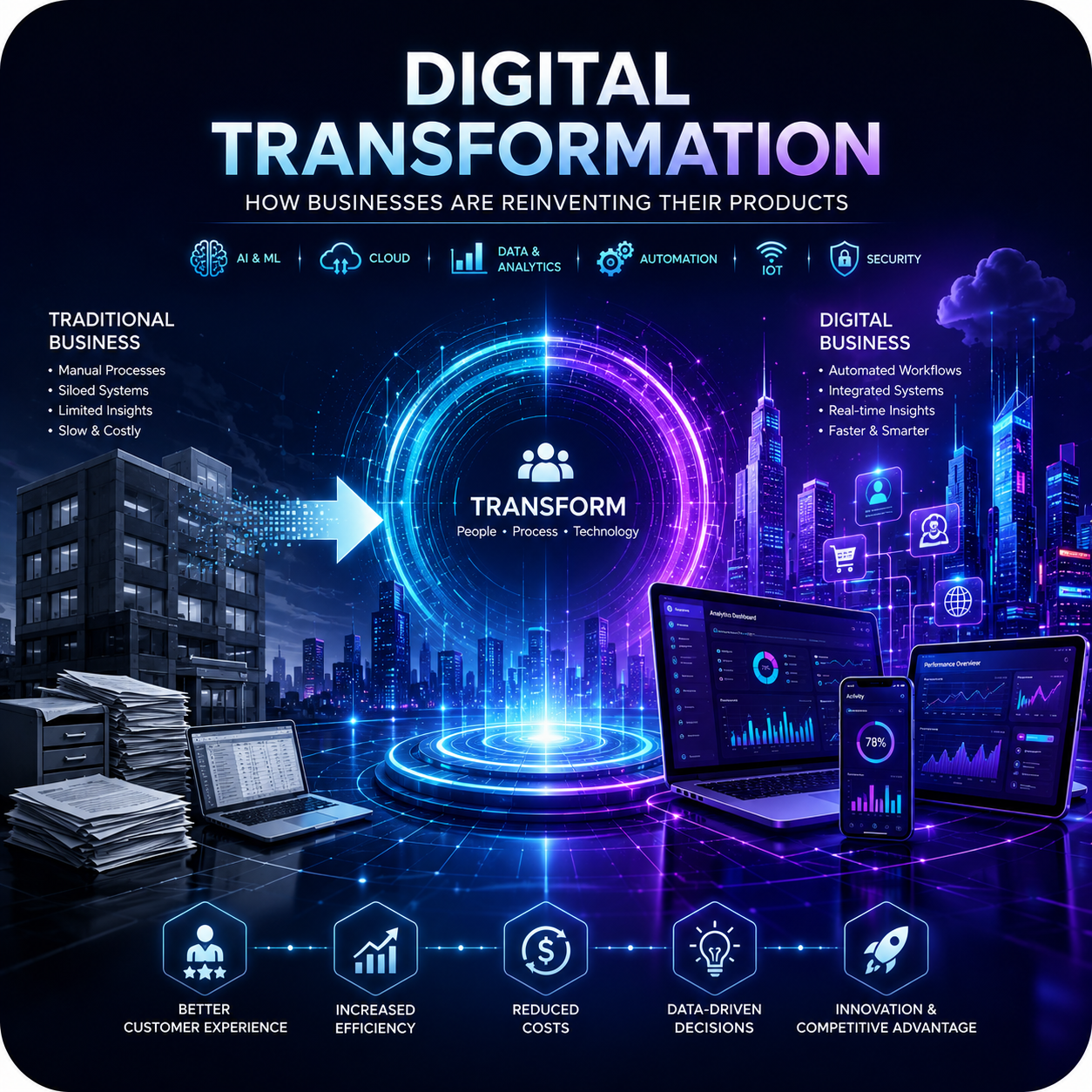
Digital Transformation: How Businesses Are Reinventing Their Products Technology is changing the way businesses operate, compete, and connect with customers. Products that once depended on physical processes, manual operations, or traditional software are increasingly becoming intelligent, connected, automated, and data-driven. This transformation is known as digital transformation. But digital transformation is more than simply moving business processes online or adopting new software. It is about fundamentally rethinking how an organization creates value by using modern technology, data, and digital processes. For product development teams, digital transformation creates an opportunity to build products that are faster, smarter, more scalable, and better aligned with changing customer expectations. What Is Digital Transformation? Digital transformation is the process of using digital technologies to fundamentally improve how a business operates and delivers value to its customers. It can involve technologies such as: * Artificial intelligence * Cloud computing * Big data and analytics * Automation * Internet of Things (IoT) * Blockchain * Mobile applications * APIs * Cybersecurity * Machine learning * Digital platforms However, technology alone does not create transformation. A successful digital transformation combines technology, people, processes, and business strategy. The goal is to create better ways of working and better experiences for customers. Why Digital Transformation Matters Customer expectations have changed dramatically. People now expect digital products to be: * Fast * Convenient * Personalized * Available 24/7 * Easy to use * Secure * Connected across devices Businesses that fail to adapt can quickly fall behind competitors that deliver better digital experiences. Digital transformation allows organizations to respond to these expectations while improving internal efficiency. For example, a traditional business might require customers to visit a physical location to access a service. A transformed business could provide the same service through a mobile application or web platform. The product becomes easier to access, while the business gains new opportunities to understand customer behavior and improve its services. The Key Technologies Driving Digital Transformation 1. Artificial Intelligence Artificial intelligence is becoming one of the most important technologies in digital transformation. AI can help businesses analyze large amounts of information, automate repetitive tasks, personalize experiences, and support decision-making. Product teams can integrate AI into applications through: * AI assistants * Recommendation systems * Predictive analytics * Automated customer support * Document processing * Fraud detection * Intelligent search * Personalized experiences AI can transform a traditional application into a more intelligent and adaptive product. 2. Cloud Computing Cloud computing has changed how businesses build and operate digital products. Instead of maintaining all infrastructure themselves, organizations can use cloud platforms to deploy applications, store data, scale computing resources, and manage digital services. Cloud technologies provide benefits such as: * Scalability * Flexibility * Faster deployment * Reduced infrastructure management * Global accessibility * Easier integration For modern product teams, cloud infrastructure can make it easier to experiment, launch new features, and scale successful products. 3. Data and Analytics Data has become one of the most valuable resources for modern businesses. Digital products can collect information about: * User behavior * Product usage * Customer preferences * Sales * Performance * Marketing * Operational processes Analytics tools can transform this information into actionable insights. Instead of relying entirely on assumptions, product teams can use data to understand what customers actually need. This creates a continuous feedback loop: Collect Data → Analyze → Understand Users → Improve Product → Measure Results 4. Automation Automation allows businesses to reduce repetitive manual work. Modern automation can be applied to areas such as: * Customer onboarding * Email communication * Data processing * Inventory management * Reporting * Billing * Marketing * Customer support When repetitive processes are automated, employees can spend more time on creative, strategic, and customer-focused work. 5. Internet of Things The Internet of Things connects physical devices to digital systems. Examples include: * Smart appliances * Industrial sensors * Wearable devices * Connected vehicles * Smart buildings * Healthcare devices IoT allows businesses to collect real-time information from physical environments and use that information to improve products and services. For example, manufacturers can use connected sensors to monitor equipment and identify potential maintenance problems before major failures occur. How Digital Transformation Is Changing Product Development Digital transformation is changing the entire product development lifecycle. From Ideas to Digital Products Traditional product development often involves long development cycles and large upfront investments. Modern digital product teams can use agile methodologies, cloud infrastructure, rapid prototyping, and continuous deployment to test ideas much faster. A product can start with a Minimum Viable Product (MVP) and evolve based on real customer feedback. This reduces the risk of spending significant resources building features that customers do not actually need. From Static Products to Continuous Products Traditional products may have a defined release cycle. Digital products are different. A web application or mobile application can be continuously updated with: * New features * Security improvements * Performance optimizations * UI improvements * Bug fixes * Personalization This means product development becomes an ongoing process rather than a one-time project. From Guesswork to Data-Driven Decisions Digital transformation enables product teams to make decisions based on real-world data. Instead of asking: “What do we think customers want?” Teams can increasingly ask: “What does the data tell us about customer behavior?” This approach can improve product decisions and reduce unnecessary development. Personalization: Creating Products Around the User One of the biggest advantages of digital products is personalization. Modern platforms can use customer behavior and preferences to create more relevant experiences. Examples include: * Personalized recommendations * Customized dashboards * Targeted content * Adaptive user interfaces * Personalized notifications For businesses, personalization can improve engagement and customer satisfaction. For users, it can make digital products feel more relevant and useful. Digital Transformation and Customer Experience Customer experience is at the center of successful digital transformation. A business can have advanced technology, but if the product is difficult to use, customers may still leave. Modern product development therefore focuses heavily on: User Experience + Performance + Convenience + Security A successful digital product should allow customers to accomplish their goals with minimal friction. For example, instead of requiring several manual steps to complete a transaction, a digital platform can simplify the process into a few intuitive interactions. The Role of APIs in Digital Transformation Application Programming Interfaces, commonly known as APIs, allow different software systems to communicate with one another. APIs are essential for building connected digital ecosystems. For example, an e-commerce platform may connect with: * Payment services * Shipping providers * Authentication systems * Analytics platforms * Marketing tools * Inventory systems This allows businesses to create products by combining different digital services rather than building every capability from scratch. An API-first approach can therefore make digital products more flexible and easier to integrate. Challenges of Digital Transformation Digital transformation offers significant opportunities, but it also presents challenges. Legacy Systems Many established organizations still depend on older software systems. Replacing these systems can be expensive and risky. Businesses may need to modernize their technology gradually while continuing to operate existing systems. Security As businesses become more digital, cybersecurity becomes increasingly important. More applications, APIs, cloud services, and connected devices can create additional attack surfaces. Security must therefore be integrated into product development from the beginning. Employee Adoption Technology alone cannot transform an organization. Employees need training and support to adopt new tools and workflows. Successful transformation requires collaboration between technology teams, business teams, and leadership. Cost and Complexity Digital transformation can require significant investment. Organizations need to prioritize projects based on their expected business value instead of adopting technology simply because it is popular. How Businesses Can Start Their Digital Transformation Digital transformation doesn’t have to happen all at once. A practical approach is to begin with a specific business or customer problem. Step 1: Identify the Problem Understand where customers or employees experience friction. Step 2: Define the Desired Outcome Determine what success looks like. For example: * Faster service * Lower operational costs * Better customer satisfaction * Higher conversion rates * Improved productivity Step 3: Select the Right Technology Choose technology based on the problem rather than selecting technology first. Step 4: Build an MVP Create a smaller version of the solution and test it with real users. Step 5: Collect Feedback Use analytics, customer feedback, and performance data to understand what works. Step 6: Improve Continuously Iterate on the product and gradually expand its capabilities. This approach allows businesses to reduce risk while continuously improving their digital products. The Future of Digital Transformation Digital transformation is moving toward a future where products become increasingly intelligent, connected, automated, and personalized. Emerging technologies such as: * Generative AI * Autonomous AI agents * Edge computing * Digital twins * Blockchain * Extended reality * Advanced robotics * Connected devices will create new opportunities for businesses to rethink existing products. The most successful organizations will not simply adopt these technologies. They will identify where these technologies can create meaningful value for customers. Conclusion Digital transformation is not simply about replacing traditional systems with modern software. It is about rethinking how businesses create products, deliver services, understand customers, and operate in a digital world. AI can make products more intelligent. Cloud computing can make them more scalable. Data analytics can make decisions more informed. Automation can make operations more efficient. IoT can connect physical products to digital ecosystems. Together, these technologies are creating a new generation of digital products. The businesses that succeed will be those that treat digital transformation as an ongoing journey rather than a one-time technology project. The future belongs to organizations that continuously learn, adapt, experiment, and build products around the evolving needs of their customers.