orybite
Turning startup ideas into polished digital products with speed and precision.
Engineering futuristic digital ecosystems and IT strategic plans to accelerate modern enterprise growth globally.
© 2026 Orybite. All rights reserved.
Built with speed & precision.
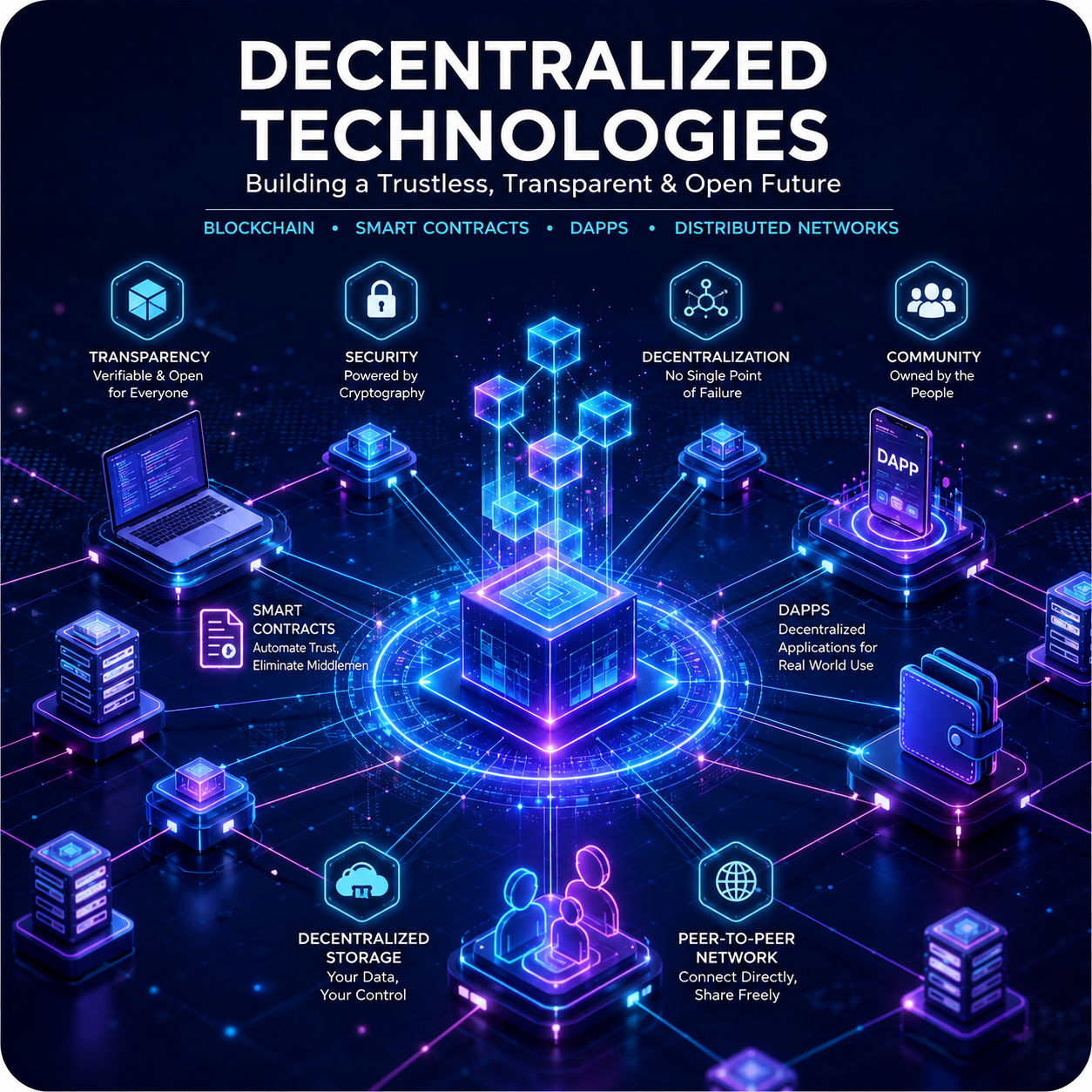
Decentralized Technologies: Building the Next Generation of Digital Products The digital world has traditionally been built around centralized systems. A company operates the servers, controls the database, manages user access, and determines how information flows through the platform. But a new generation of technologies is changing this model. Decentralized technologies distribute data, computation, ownership, or decision-making across multiple participants instead of relying entirely on a single central authority. Technologies such as blockchain, smart contracts, decentralized applications, peer-to-peer networks, and decentralized storage are opening new possibilities for digital product development. What Are Decentralized Technologies? Decentralized technologies are systems designed to distribute control and responsibility across multiple independent participants. In a traditional centralized application, a single organization may control the infrastructure and database. In a decentralized system, parts of that infrastructure or decision-making process can be distributed across a network. This approach can provide benefits such as: * Greater transparency * Reduced dependence on a single authority * Improved data integrity * Digital ownership * Automated transactions * Increased resilience * New business models However, decentralization isn’t automatically the right solution for every product. Product teams need to determine whether it solves a genuine business or user problem. Key Technologies Behind Decentralization 1. Blockchain Blockchain is one of the most recognized decentralized technologies. It works as a distributed ledger where transactions or other records can be stored across a network. Instead of depending on one central database, participants can independently verify information according to the rules of the network. Blockchain can support applications involving: * Digital assets * Financial services * Supply-chain tracking * Digital identity * Tokenization * Smart contracts * Decentralized applications For product teams, blockchain can provide a shared source of truth between different parties. 2. Smart Contracts Smart contracts are programs deployed on blockchain networks that automatically execute predefined rules. For example, a smart contract could automatically transfer an asset when specific conditions are fulfilled. This can reduce the need for manual intervention and enable programmable digital transactions. Smart contracts are commonly used for: * Automated payments * Digital assets * Decentralized finance * Token systems * Governance * Escrow systems Because smart contracts can directly control digital assets, security and testing are critical during development. 3. Decentralized Applications Decentralized applications, commonly known as DApps, combine familiar application interfaces with decentralized infrastructure. A DApp may use a conventional frontend while using blockchain networks and smart contracts for selected backend functionality. A simplified architecture could look like: User → Frontend → Smart Contract → Blockchain Network This allows developers to combine traditional software engineering with decentralized technologies. 4. Decentralized Storage Traditional applications commonly rely on centralized cloud storage providers. Decentralized storage distributes data across multiple nodes or participants in a network. Technologies such as IPFS, Filecoin, and Arweave demonstrate different approaches to decentralized data storage. This can be particularly useful when applications need data to remain accessible without relying entirely on a single storage provider. 5. Peer-to-Peer Networks Peer-to-peer networks allow computers to communicate directly with one another rather than requiring every interaction to pass through a central server. P2P architecture plays an important role in areas such as: * Blockchain networks * File distribution * Distributed computing * Communication * Content delivery The underlying concept is simple: network participants can contribute resources instead of depending entirely on centralized infrastructure. Why Decentralization Matters for Product Development Decentralized technologies aren’t only relevant to blockchain developers. They can influence how entire digital products are designed. Building Trust Digital products often require users to trust the organization operating the platform. Decentralized systems can move some of that trust toward cryptographic verification, transparent protocols, and network consensus. This can be especially valuable when multiple organizations need to interact without giving one organization complete control. Enabling Digital Ownership Blockchain-based systems can represent ownership through digital tokens. This can create new possibilities for: * Digital collectibles * Gaming assets * Memberships * Loyalty programs * Digital credentials * Tokenized assets Instead of ownership existing only inside one company’s database, certain assets can potentially become independently verifiable and portable. Automating Processes Smart contracts allow developers to encode specific business rules into decentralized networks. When predefined conditions are satisfied, the system can automatically execute an action. This can help reduce manual processes and create more predictable workflows. Increasing Transparency Certain decentralized networks provide publicly verifiable transaction records. For industries where transparency matters, this can create new opportunities for tracking and verification. Potential applications include: * Supply chains * Financial services * Asset management * Auditing * Digital identity Challenges of Decentralized Technologies Decentralization also introduces new challenges. Scalability Some decentralized networks can have limitations in transaction throughput, latency, or network costs compared with centralized systems. Product teams need to evaluate performance requirements before selecting a decentralized architecture. User Experience Wallets, transaction approvals, private keys, network fees, and blockchain confirmations can create additional complexity for users. A successful product should hide unnecessary technical complexity and provide a simple user experience. Security Security is one of the most important considerations in decentralized product development. Potential risks can include: * Smart-contract vulnerabilities * Private-key theft or loss * Phishing attacks * Access-control problems * Protocol vulnerabilities * Incorrect contract logic Security testing should therefore be integrated throughout the product development lifecycle. Regulatory Considerations Decentralized technologies are developing alongside changing regulations. Applications involving financial services, digital assets, identity, or sensitive data may have additional legal and compliance requirements. Organizations should evaluate applicable regulations before launching decentralized products. How to Decide Whether Your Product Needs Decentralization Decentralization should not be implemented simply because it is a popular technology trend. Product teams should start with the problem they are trying to solve. Ask: * Does the product require multiple parties to share a trusted source of truth? * Would removing a central intermediary provide real value? * Is transparent verification important? * Does the product require digital ownership? * Would users benefit from decentralized infrastructure? * Can the system meet scalability requirements? * Can the additional complexity be justified? If decentralization doesn’t provide a meaningful advantage, a conventional centralized architecture may be the better choice. The Future: Hybrid Digital Products The future of digital product development is unlikely to be completely centralized or completely decentralized. Instead, hybrid architectures are likely to become increasingly important. A modern product could combine: Frontend: React or another modern framework Backend: Node.js and traditional APIs Cloud: Scalable cloud infrastructure Blockchain: Digital ownership and transactions Smart Contracts: Automated business rules Decentralized Storage: Selected data and digital assets This approach allows product teams to use decentralized technology where it provides genuine value while continuing to use traditional technologies where they are more efficient. Conclusion Decentralized technologies are creating new possibilities for digital product development. Blockchain, smart contracts, DApps, peer-to-peer networks, and decentralized storage can help organizations rethink trust, ownership, transparency, automation, and digital collaboration. However, decentralization isn’t a universal replacement for centralized systems. The best products will use decentralization strategically—adopting it where it solves real problems and creates measurable value. The important question isn’t: “How can we decentralize our product?” The better question is: “Where can decentralization create meaningful value for our users and our business?” That mindset can help product teams build more innovative, transparent, and future-ready digital products.